Navratri 2026 · Live sessions
या देवी सर्वभूतेषु शक्तिरूपेण संस्थिता
To the Devi who dwells in every being as Shakti · Devi Mahatmyam
Navratri Tapasya
Ten mornings with the Devi, from the first night of Navratri to Vijayadashami.
Learn three Devi chants from an Isha Samskriti graduate, meditate, practise yoga, and live each night of Navratri with its meaning, so the festival becomes your sadhana instead of something that passes you by.
Registrations for this cohort are closed. Join the waitlist for first access to the next cohort.
The best way to approach Navratri is in a spirit of celebration. This has always been the secret of life: to be non-serious but absolutely involved.
Why Navratri
Nine nights of the Devi
Navratri means “nine nights”. As Sadhguru explains, they are counted from the day after the new moon, and these first nine days of the lunar cycle are feminine in nature: a time for Devi, the feminine dimension of the Divine.
There are twelve such periods in a year. The one that comes in October is considered the most significant, because it is dedicated to Sharada, the goddess of learning.
Most of us celebrate Navratri from the outside: a puja, a fast, an evening of garba. Navratri Tapasya is a way to celebrate it from the inside, one morning at a time, with chants, practice and understanding.
Three Devis, three chants
Durga, Lakshmi and Saraswati
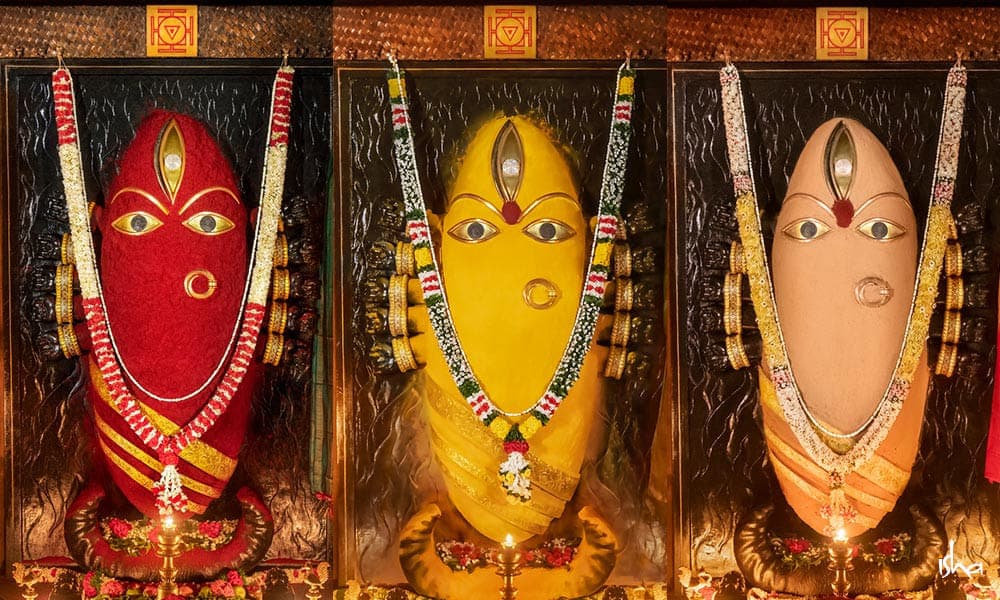
Sadhguru describes Durga, Lakshmi and Saraswati as three dimensions of the feminine: the earth, the sun and the moon; tamas, rajas and sattva. Navratri gives three nights to each. For each Devi you learn one Isha chant, properly, and sing it every morning of her phase.
Nights 1 – 3 · 11 – 13 Oct
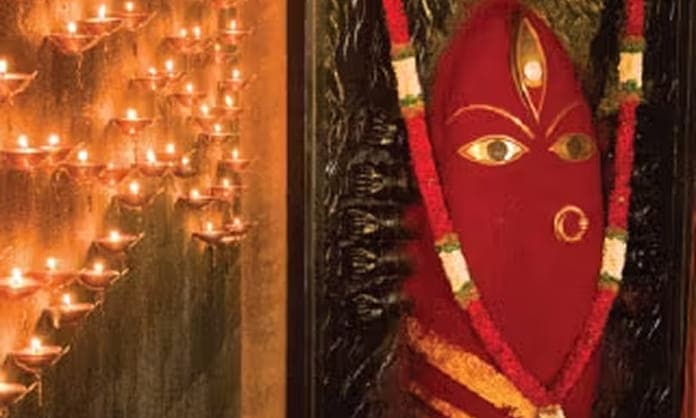
Durga
दुर्गा
The Mother as strength
TamasEarth
Durga, the fierce form of Parvati. The first three nights ground you in the body and in the earth it comes from, the source of stability and power.
The chant · Parvati
Bhairavi Jaya Bhairavi
A song hailing the Devi. Jaya means victory.
Nights 4 – 6 · 14 – 16 Oct
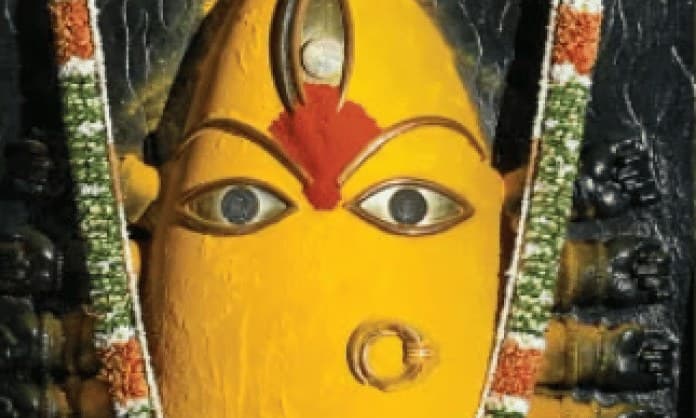
Lakshmi
लक्ष्मी
The Mother as abundance
RajasSun
Wealth, vitality and passion. The middle nights are about energy: learning to put it into action that frees you instead of entangling you.
The chant · Lakshmi · Shiva Duti
Bhairavi Vandana
Verses from the Devi Mahatmyam: a prayer for protection and fearlessness.
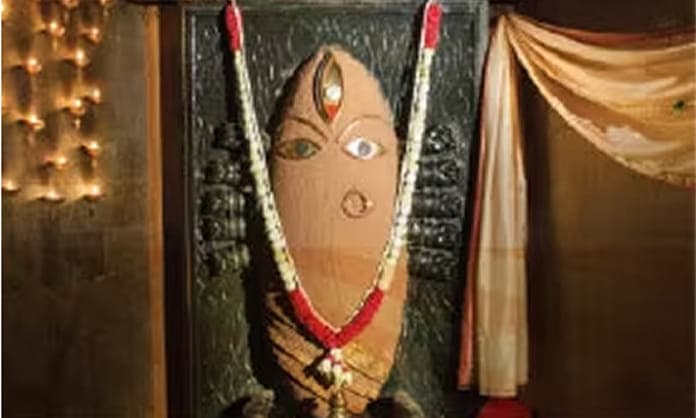
Nights 7 – 9 · 17 – 19 Oct
Saraswati
सरस्वती
The Mother as knowledge
SattvaMoon
Knowledge, refinement and transcendence. The last nights turn you towards what lies beyond the limitations of the body.
The chant · Saraswati
Pratha Sthuve Parasivam Bhairavi
Dawn verses praising the Devi as the goddess of words and language.
Where each chant comes from, and what it carries
Day 10 · Tue, 20 Oct
Vijayadashami विजयदशमी
The tenth day is the day of victory over all three qualities: tamas, rajas and sattva. We sing all three chants together and mark Vidyarambham, the traditional day to begin something new, a tradition observed especially in Kerala and South India.
Three Devis, three chants
The chants you will learn
Each chant is an Isha rendition by Sounds of Isha, taught line by line by Manasa Ganga, with its pronunciation, meaning and melody. Here is where each one comes from, and what it carries.
For Parvati · Nights 1 – 3
Bhairavi Jaya Bhairavi
भैरवी जय भैरवी
Learnt from Day 1, Sun 11 Oct
- Where it comes from
- Composed by Sounds of Isha, Isha’s own music ensemble, with lyrics by Rasika Balaji, a graduate of Sadhguru Gurukulam Samskriti. Isha’s Project Samskriti offers a music workshop on this same song.
- What it says
- A devotional song and an ode to Linga Bhairavi, the Divine Feminine. It celebrates the many sides of the Devi, powerful and nurturing at once. Jaya means victory: the song hails the Mother.
- What it can do
- It opens the nine nights in the mood of the Durga phase: grounded, strong and full of devotion. A few lines, sung again and again with involvement, are the simplest way into the feeling of the festival.
For Lakshmi (Shiva Duti) · Nights 4 – 6
Bhairavi Vandana
भैरवी वन्दना
Learnt from Day 4, Wed 14 Oct
शिवदूतीस्वरूपेण हतदैत्यमहाबले
In the form of Shiva Duti, you struck down the mighty demons - Where it comes from
- Its verses come from the Narayani Stuti in the Devi Mahatmyam (chapter 11), the hymn the gods sing to the Devi after her victory; the Devi Mahatmyam is part of the Markandeya Purana. Sounds of Isha set them to music on Triveni, their 2016 Navratri album, with every verse closing on “Bhairavi namostute”, salutations to Bhairavi.
- What it says
- The first verse names her Shiva Duti, “she who made Shiva her messenger”, the form in which she destroyed the mighty demons. Another calls her Lakshmi, modesty, great knowledge, faith and nourishment. Isha describes it as an appeal to Linga Bhairavi for protection and liberation, as the one who nourishes and holds all powers.
- What it can do
- It is a prayer for fearlessness: one verse asks her to protect us from every fear. For the Lakshmi nights, which are about abundance and energy, it asks for the nourishment and protection that let that energy flow freely.
For Saraswati · Nights 7 – 9
Pratha Sthuve Parasivam Bhairavi
Learnt from Day 7, Sat 17 Oct
प्रातः स्तुवे परशिवां
At dawn, I praise the supremely auspicious one - Where it comes from
- Adapted from the Lalita Pancharatnam, five morning verses traditionally attributed to Adi Shankara, each beginning with prātaḥ, “at dawn”. Sounds of Isha’s rendition, on the Triveni album (2016), addresses the verses to Bhairavi. It is also released as Prata Stuve Para Shivam Bhairavi.
- What it says
- Prātaḥ stuve paraśivām: “at dawn I praise the supremely auspicious one”. It calls the Devi by her names (Kameshwari, Kamala, Maheshwari, Shambhavi, mother of the worlds, goddess of speech, Tripureshwari) and, in Isha’s words, praises her as the goddess of words and language.
- What it can do
- A dawn hymn for a dawn session. Sung at sunrise through the Saraswati nights, it turns the morning towards learning, clarity and the refinement those last nights are about.
It is the sound which is important – the impact of the sound. If you allow the sound to work upon you, it will break down walls and lead you in a certain direction.
6:30 – 7:30 AM IST
One hour of sadhana, every morning
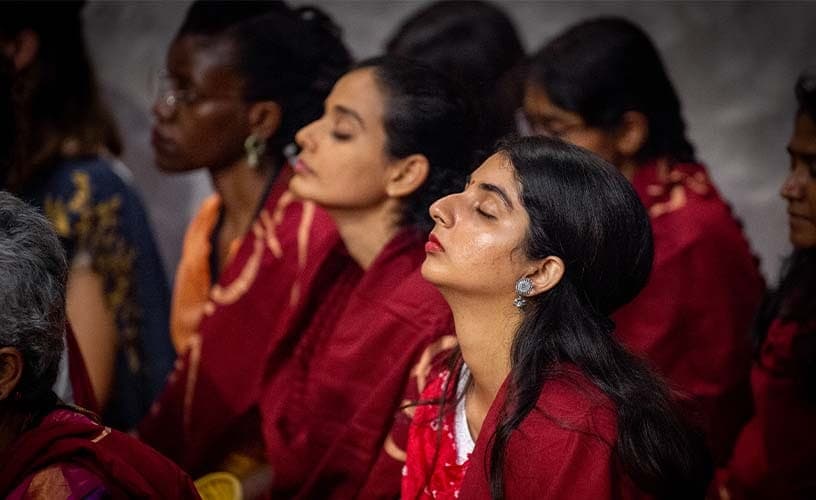
Invocation
We open together with an invocation to the Devi, and settle into the morning.
Yoga and meditation
Yogic practices and a guided meditation to prepare the body, the breath and the mind.
Learn the chant
Line by line with an Isha Samskriti graduate: pronunciation, meaning and melody, then singing together.
The night’s significance
The Devi of the day, her stories, and how to carry the day’s quality into the rest of your life.
Included with your registration
Two bonus evenings
Bonus 1
Sankalp Night
Saturday 10 Oct, 7:30 PM ISTIndia time (GMT+5:30)
Set your intention for the nine nights, the evening before Navratri begins.
Bonus 2
Durga Ashtami Family Session
Sunday 18 Oct, 7:30 PM ISTIndia time (GMT+5:30)
Bring your family.
Family members join free
Registrations for this cohort are closed. Join the waitlist for first access to the next cohort.
Who teaches the chants
Chants from an Isha Samskriti graduate
Isha Samskriti is the school Sadhguru founded at the Isha Yoga Center in Coimbatore. Children join at seven or eight and train until eighteen in Indian classical music, Bharatanatyam, Kalaripayattu, Sanskrit and yoga, as a spiritual process rather than a hobby.
Your chant teacher, Manasa Ganga, grew up in that training and has been learning Hindustani Classical Music for over 15 years. The chants are Isha renditions, offered with permission, and taught the way they were learnt: with the right pronunciation, the right melody and the right inner attitude.
Yoga, meditation and the daily sharing on Navratri are guided by Sadhana Saarthi.
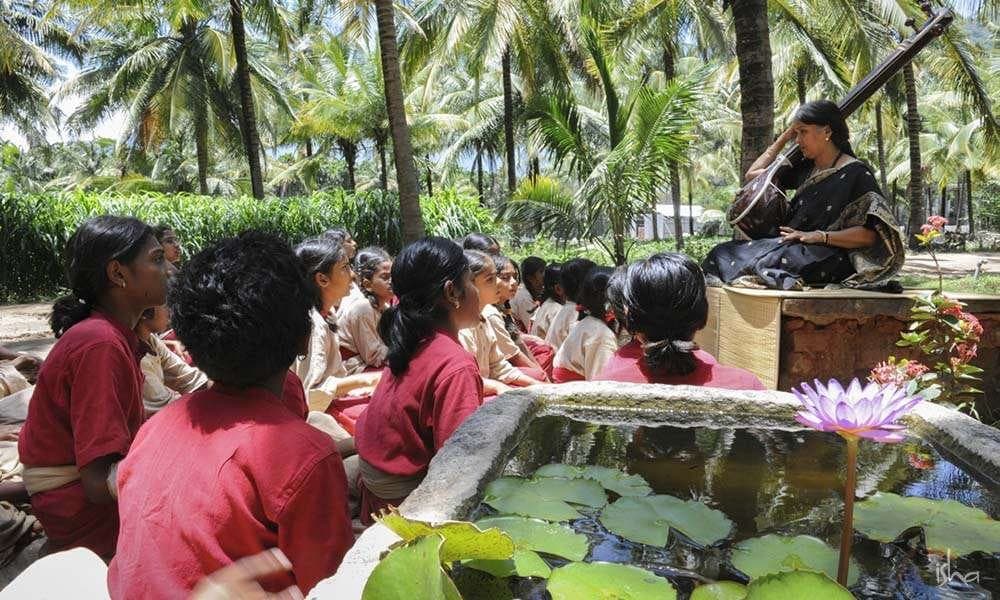
“The pride of being human is that you can learn just about anything – if you are willing.”
Sadhguru
Your ten mornings · 11 – 20 October 2026
From the first night to Vijayadashami
Each morning carries the quality of its night. Here is what we share, day by day.
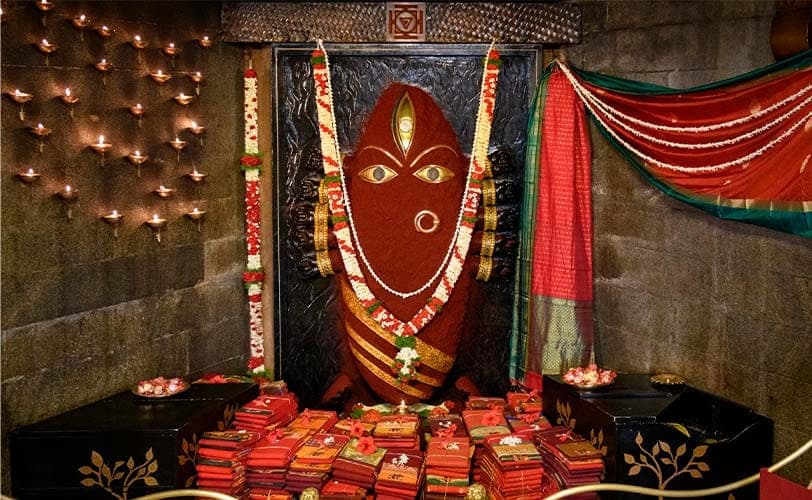
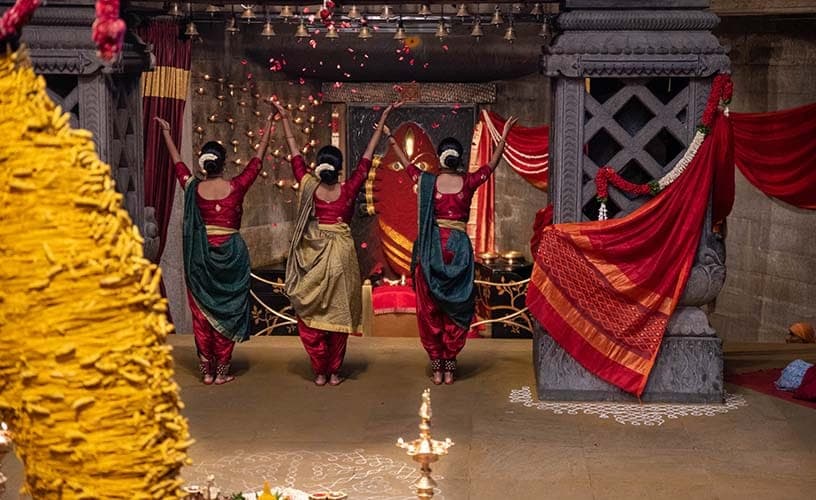
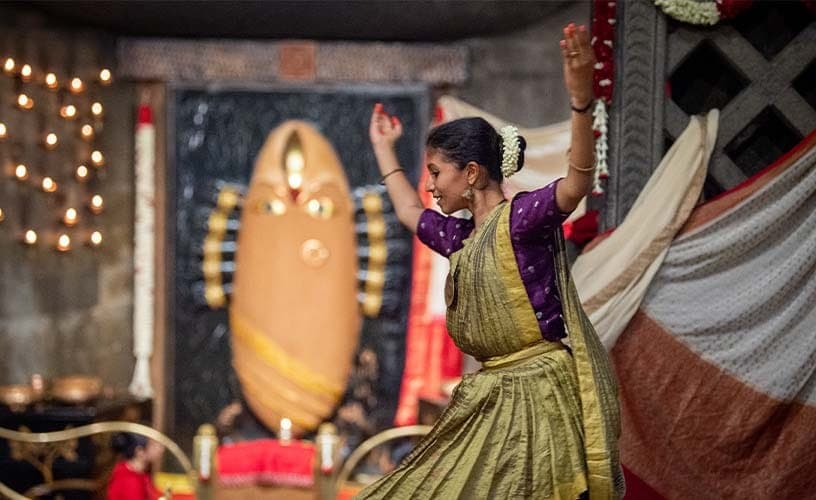
Durga
1Sun, 11 Oct
Why nine nights?
The feminine phase of the moon, and why the October Navratri, dedicated to Sharada, matters most.
Chant begins: Bhairavi Jaya Bhairavi
2Mon, 12 Oct
The earth you are made of
Tamas as the nature of the earth and of birth, and how to feel the body as a part of her.
3Tue, 13 Oct
The fierce Mother
Why this culture worships Devis who are fierce as well as gentle, and what Durga asks of us.
Lakshmi
4Wed, 14 Oct
Energy and abundance
Rajas, the sun, and the gifts of Lakshmi: wealth, vitality and wellbeing.
Chant begins: Bhairavi Vandana
5Thu, 15 Oct
Action that frees
How the same work becomes joy when done willingly, and suffering when done unwillingly.
6Fri, 16 Oct
Living with passion
Passion as unbridled involvement: in singing, in walking, in every breath.
Saraswati
7Sat, 17 Oct
The goddess of learning
Sattva, the moon, and Saraswati, who has to be reached for.
Chant begins: Pratha Sthuve Parasivam Bhairavi
8Sun, 18 Oct
Durga Ashtami
Making body, mind and energy transparent enough to feel the source of creation within.
Evening: family session, 7:30 PM IST
9Mon, 19 Oct
Mahanavami and Ayudha Puja
Honouring the tools and instruments that sustain your life, on the last night of the Devi.
Vijayadashami
10Tue, 20 Oct
Vijayadashami
The day of victory. All three chants together, and Vidyarambham: a day to begin something new, a tradition observed especially in Kerala and South India.
Registrations for this cohort are closed. Join the waitlist for first access to the next cohort.
WhatsApp sangha
Navratri, all day long
In the Navratri Tapasya WhatsApp group, the festival carries on through the day, with something shared for every night.
Stories of the Devi
A story for each day, of the Devi the day belongs to.
Preparation guidelines
How to prepare for the next morning, and for each phase.
Navratri recipes
Simple satvik and fasting recipes for the nine days.
Facts and meanings
What the rituals, offerings and customs actually mean.
Songs
Devi songs to keep the mood of Navratri alive through the day.
Answers
Ask about the chants, the practices or the festival, any time.
Who guides you
Your guides for the ten mornings

Suryansh Sharma
Sadhana Saarthi
- Sadhguru Gurukulam Classical Hatha Yoga Certified Teacher
- NIM certified mountaineer
Guides yoga, meditation and the daily meaning of each night.

Manasa Ganga
Alumna of Sadhguru Gurukulam, Isha Samskriti
- Over 15 years of learning and performing Hindustani Classical Music
- Multiple awards at the Shanmukhananda Music Competitions, Mumbai
- Certified Isha Hatha Yoga teacher
Teaches the three Devi chants: pronunciation, meaning and melody, line by line. Music has always been a part of her life, something she deeply enjoys and continues to explore.
60+ seekers have practised with Sadhana Saarthi’s Tapasya since July 2026
Who it is for
This is for you if…
- You celebrate Navratri every year and want to go deeper than the rituals.
- You love Devi chants and have always wanted to learn them properly.
- You want a morning sadhana, and ten days of structure to begin it.
- You live far from home and miss celebrating Navratri with others.
- You have never chanted or meditated before. No experience is needed.
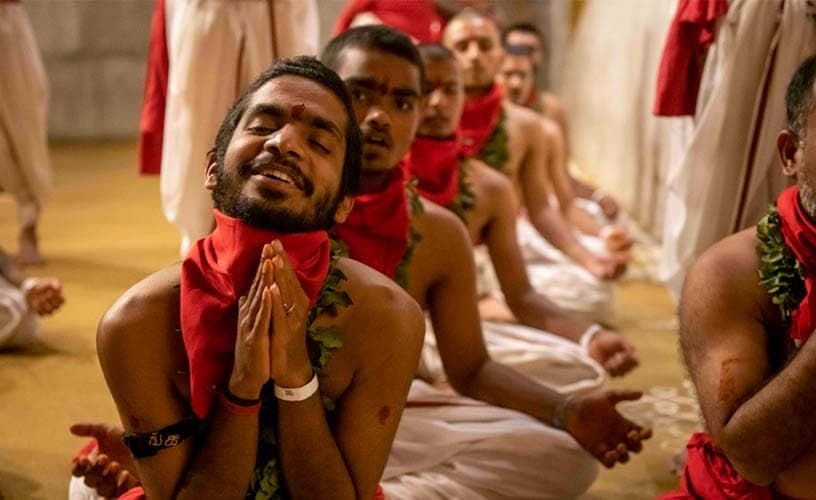
“The divine feminine is an expression of exuberance. May you know the bounty of exuberance this Navratri.”
Sadhguru
Registrations are closed
Join the waitlist
Everything you receive
- 10 live sessions, 6:30 – 7:30 AM IST
- 3 Devi chants, learnt properly
- Daily yoga and guided meditation
- The meaning of each night of Navratri
- WhatsApp sangha: stories, recipes, songs
- Bonus: Sankalp Night, Sat 10 Oct, 7:30 PM IST
- Bonus: Durga Ashtami family session, Sun 18 Oct, 7:30 PM IST
Private 1:1 session
Learn a chant one-on-one with Manasa Ganga
Missed the group, or prefer to learn at your own pace? Request a private online session to learn one of these Devi chants with Manasa Ganga, an alumna of Sadhguru Gurukulam Isha Samskriti. We will write to you with available times and the fee.
Registrations are closed
Join the waitlist for first access to the next cohort.
Your details
No payment now. Leave your details and we will write to you first when the next cohort opens.
Frequently asked questions
Have a question before you join?
Message us on WhatsApp and we will answer you personally, whether it is about the chants, the timing or whether this is right for you.
The tenth day is Vijayadashami, which means the day of victory. That means you blossomed!
सर्वमङ्गलमाङ्गल्ये शिवे सर्वार्थसाधिके।शरण्ये त्र्यम्बके गौरि नारायणि नमोऽस्तु ते॥
O auspiciousness of all that is auspicious, O gracious one who fulfils every aim, refuge of all, three-eyed Gauri, Narayani: salutations to you. · Devi Mahatmyam
Ten mornings, three Devis, one Navratri
Registrations for this cohort are closed. Join the waitlist for first access to the next cohort.
Registrations are closed
Join the waitlist for first access to the next cohort.